

Two of the most consequential fields in any campaign live in different steps of the wizard. Pick them carefully.
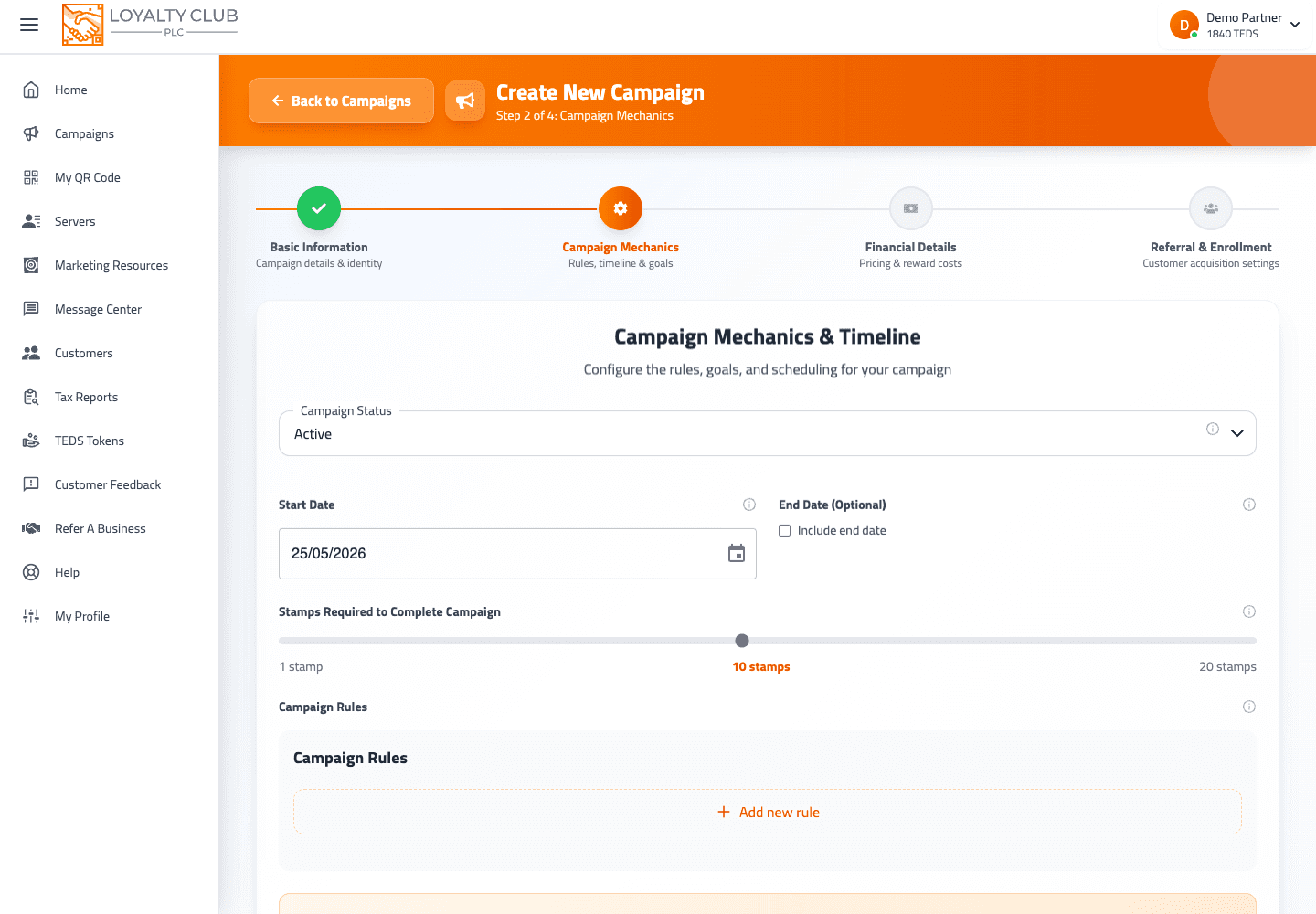
The stamp goal (Mechanics step)
The Goal field on Step 2 — the number of stamps a member must collect to redeem the reward.
- 10 is the most common — easy to think about, achievable for regular customers within a few months.
- 5 is reasonable for higher-ticket items where the per-stamp value is higher.
- 20 for very-low-cost items, though most partners find 10 still works.
There’s no UI confirmation that the stamp goal is locked once members are enrolled — but practically, changing it after members have stamps would be confusing. Pick once, well.
The reward fields (Basic Info + Financial steps)
In Step 1 — Basic Info:
- Reward Name — what members see on the card. "Free flat white" reads better than "Loyalty reward". It is also what
{rewardname}fills in on your club emails, so "Your free flat white is waiting" only reads well if the name does. - Description — short context for members.
In Step 3 — Financial:
- Reward Net Cost — what the reward actually costs you in stock terms.
- Reward RRP — the customer-facing retail price.
These two financial fields don’t need to match perceived value 1:1 — net cost is your real cost, RRP is the value you put on it.
Picking a reward that works
Patterns from partners running successful campaigns:
- Make the reward feel disproportionate to the goal. A free coffee for 10 visits is fine. A free coffee + pastry for 10 visits is a story members tell.
- Avoid restrictions in the description. "Free coffee, dine in only Tuesday-Thursday before 11am" trains members to ignore the programme. Just say "Free coffee" and own the cost.
- Round numbers. 10 stamps for a free coffee is easier to remember than 8.
Worked example — typical café campaign
| Step | Field | Value |
|---|---|---|
| Basic Info | Campaign Name | Buy 9, Get 10th Free |
| Basic Info | Reward Name | Free flat white |
| Basic Info | Description | Any size, any milk, eat in or takeaway |
| Mechanics | Goal | 10 |
| Financial | Reward Net Cost | £0.40 |
| Financial | Reward RRP | £3.50 |
In one sentence
Stamp goal lives in Step 2 as goal; reward fields are split — Reward Name + Description in Step 1, Net Cost + RRP in Step 3.